
- History of Establishment
The SPE Japan Section was established in the 1950s, during the infancy of Japan’s plastics industry, driven by the strong enthusiasm of engineers seeking to acquire the latest technological information from the United States. The details of its history are summarized below.
1.1 Background of Establishment
In the 1950s, Japanese engineers were extremely eager to obtain overseas plastics technology information, particularly from the United States. At that time, SPE Journal (currently Plastics Engineering), published by the Society of Plastics Engineers (SPE)—an organization of plastics engineers across the United States—served as an invaluable reference. Japanese engineers held a strong desire to subscribe to it officially.
1.2 Catalyst for Establishment
The direct trigger for the section’s establishment was the visit to Japan by Mr. Huggins, an executive at The Dow Chemical Company.
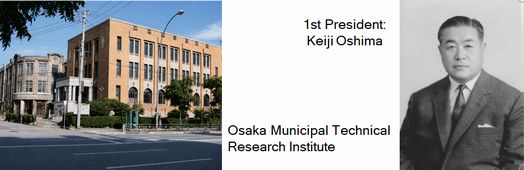
Mr. Tamotsu Ikeda (Nichimen Corporation), a prominent member of the “Plastics Technology Research Group” at the time (now the Japan Society of Plastics Technology), introduced Mr. Huggins. Invited to a regular meeting at the Osaka Municipal Technical Research Institute, Mr. Huggins spoke about SPE’s active operations. On that occasion, he suggested, “Japanese engineers can also join if they have a proven track record. Why not establish a Japan Section?”
1.3 Launch of the SPE Osaka Section
Mr. Tadao Nakao (Nippon Kako Zai, currently Sumitomo Bakelite), who was then president of the Research Group, agreed with this proposal, and discussions progressed rapidly.
Establishment Date: Early summer of 1956
Name: Initially named the “SPE Osaka Section” because its initial membership was centered in the Osaka area.
Initial Officers:
President: Keiji Oshima (Director, Osaka Municipal Technical Research Institute)
Councilor: Tadao Nakao
Secretary: Kiyotsugu Nakayama (Chief of Secretariat, Kansai Branch of the Japan Synthetic Resin Industry Association)
1.4 Rename to the Japan Section
Following its inauguration, membership steadily increased, with members in the Tokyo vicinity coming to account for nearly half of the total. To reflect a broader organizational scope, the group was renamed the “Japan Section (SPE Japan Section)” in 1963.
- Hosting of RETEC
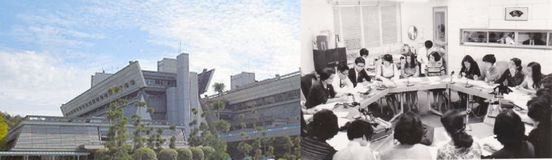
RETEC (Regional Technical Conference) is t he designation for regional technical conferences organized by individual sections of the Society of Plastics Engineers (SPE). Within the SPE Japan Section, RETEC has evolved into a cornerstone activity, serving as a vital international forum for technical exchange. Its history is detailed below.
2.1 The Inaugural JAPAN RETEC (1968)
The single largest milestone for the Japan Section was the “1st JAPAN RETEC,” held from October 14–15, 1968, at the Kyoto International Conference Center.
Historical Significance: As the first RETEC held outside North America, it drew significant interest from SPE Headquarters.
Background: Tadao Nakao, then Section President, and Keiji Oshima, Chairman of the Executive Committee for the 2nd Japan Plastics Fair (JAPAN PLAS), planned the conference to enhance the fair’s international reach.
Scale and Content: Attracting 274 participants (239 domestic, 35 international), it was a full-scale international conference featuring simultaneous Japanese-English interpretation. President Von of SPE Headquarters attended and delivered a congratulatory address.
2.2 Institutionalization and Standardized Format
Following its success in 1968, activities experienced a temporary hiatus before resuming on a regular basis in 1980.
Frequency: Standardized to a biennial schedule (held every two years).
Location: Alternated typically between Tokyo and Osaka.
Cooperation with JAPAN PLAS: Held on the day prior to the opening of the International Plastics Fair (JAPAN PLAS / IPF) to maximize convenience for attendees.
Early Conference History:
2nd (1980, Osaka): “Recent Plastics Technology in Japan”
3rd (1982, Tokyo): “Recent Advances in Plastics Engineering in Japan”
4th (1984, Osaka): “Recent Advances in Plastics Technology”
5th (1986, Tokyo): Commemorated the 30th Anniversary of the SPE Japan Section
2.3 Developments from the 1990s to the Present
Since the 1990s, RETEC has continued to address cutting-edge technological themes, consistently inviting the SPE International President to participate.
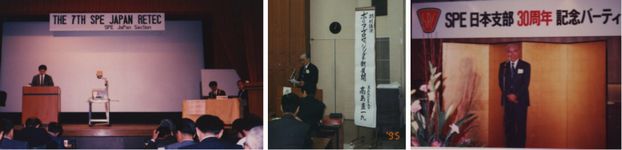
10th (1995, Osaka): “Latest Trends in Plastics Materials and Molding Technology”
11th (1997, Tokyo): “New Technologies to Make the 21st Century Exciting”
12th (1999, Tokyo): “Advanced Technologies for Plastics Applications”
13th (2001, Tokyo): “Microstructure Control of Plastics Materials”
14th (2006, Tokyo): “Plastics Technology Controlling Light”
2.4 Expansion into Asia (Birth of ASIATEC)
Entering the 2000s, initiatives to expand the RETEC framework across Asia gathered momentum.
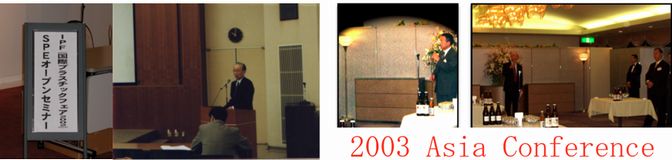
2003 (Nagoya): Expanding the scope of JAPAN RETEC to Asia, the “SPE ASIAN PLASTICS TECHNOLOGY CONFERENCE 2003” was hosted at the Nagoya International Exhibition Hall.
ASIATEC 2011 (Tokyo): Held at Tokyo Big Sight in 2011, this event was modeled after SPE Headquarters’ annual conference “ANTEC,” aiming to establish a recurring Asian regional conference using the “…TEC” naming convention.
- The 1990s
During the 1990s, despite facing challenging domestic and international conditions—such as a prolonged economic recession and a strong yen—the SPE Japan Section transitioned from a technical “salon” into an active international hub. It achieved this by institutionalizing RETEC, introducing Open Seminars, and deepening ties with Asian nations.
3.1 Leadership and Administration
The section was guided during this decade by the following presidents:
Masanobu Takizawa (1989–1991): Toshiba Machine Co., Ltd.
Yasu Oyanagi (1991–1993): Kogakuin University
Rokuro Murai (1993–1997): Plastics Technical Laboratory
Hidemitsu Hojo (1997–1999): Nihon University
Sadao Hoshino (1999–2001): Elf Atochem
3.2 Regularization of RETEC
“JAPAN RETEC,” the section’s flagship biennial event, continued to focus on cutting-edge technical issues:
3.3 Launch of Open Seminars
To supplement activities during non-RETEC years, “Open Seminars” were introduced in earnest starting in the mid-1990s.
1996: Focused on low-pressure molding technologies (HELGA, gas-assisted, injection compression molding, etc.).
1998: Examined “Plastics Materials Required for the New Century” from user, environmental, and resource perspectives.
3.4 Alignment with Contemporary Issues
Activities were swiftly adapted to address broader social and industrial shifts:
Environment and Safety: In addition to plastic waste management and recycling, a 1998 lecture addressed the biological impacts of “endocrine disruptors” (environmental hormones), a topic of intense concern at the time.
Regulations and Quality: Seminars addressed compliance with the Product Liability (PL) Act, ISO-9000 certification, and Life Cycle Assessment (LCA).
Introduction of Advanced Technology: Annual lecture series were held to present papers from SPE Headquarters’ ANTEC conference, sharing global trends with local members.
3.5 Regional Cooperation with Asia and Globalization
Around 1990, as Japanese plastics production reached 13% of global output and domestic manufacturing shifted toward Asia, the section strengthened cooperation with Asian SPE sections. Interactions with the Taiwan Section were particularly active, leading to participation in the Asian Regional Conference held in Taiwan in 1997.
- The 2000s
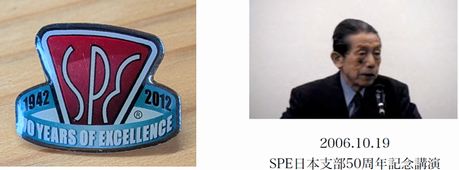
Marked by its 50th anniversary in 2006, the SPE Japan Section transformed during the 2000s from an informal salon into a proactive, international academic society. Structural reforms were implemented to foster stronger ties across Asia and establish organizational autonomy.
4.1 Leadership and Management Policy
Sadao Hoshino (1999–2001): Prioritized fellowship among engineers while expanding Open Seminars to cover advanced topics such as foaming technology.
Shinichi Izawa (2002–2014): Taking office in 2002 under the banner of “de-salonification,” he energized academic activities by enriching study groups and lectures and establishing formal bylaws.
4.2 International Technical Exchange and Asian Expansion
To address the structural shift of production bases to Asia, cooperation with regional sections expanded significantly:
13th RETEC (2001): Held in Tokyo, focusing on “Microstructure Control of Plastics Materials,” including discussions on nanocomposites.
SPE Asian Plastics Technology Conference 2003: Hosted in Nagoya, Aichi Prefecture. This was the first Asian international conference managed by the Japan Section and served as the inaugural rotating Asian regional meeting.
Participation in Asian Forums: The section established networks across South Korea, China, Hong Kong, and other Asian regions, including attending the Asian Forum organized by the Taiwan Section.
4.3 50th Anniversary and Organizational Reforms
The 50th anniversary in 2006 catalyzed fundamental reforms aimed at long-term sustainability:
Enactment of New Bylaws (2006): New bylaws established local “Section Membership” distinct from SPE Headquarters membership, reinforcing the Japan Section’s independence and identity.
Introduction of Corporate Membership: A corporate membership system was launched to strengthen support from industry partners.
50th Anniversary RETEC (2006): The 14th RETEC was held under the innovative theme “Plastics Technology Controlling Light.” Executive leaders from SPE Headquarters attended to present honors.
Establishment of the Steering Committee (2008): Monthly steering committee meetings were regularized to accelerate decision-making and event execution.
Relocation of Secretariat (2007): The Tokyo office relocated from its long-standing home at the Japan Synthetic Resin Technology Association to the premises of Plastics Age Co., Ltd. in Chiyoda-ku, Tokyo.
4.4 Forward-Looking Technical Themes
The section organized seminars aligned with global technological trends:
Nanotechnology: Recurring lectures focused on nanocomposites and microstructure control, leading to joint lectures with other academic societies.
Environment and Energy: Key topics included bioplastics, recycling technologies, and materials for fuel cells.
Advanced Fields: Focused on areas leveraging Japanese industrial strengths, such as lightweighting for automotive applications (CFRTP, etc.), medical plastics, and IT-related technologies.
- The 2010s
In the 2010s, the SPE Japan Section celebrated its 60th anniversary (2016). This decade saw the consolidation of its status as an Asian information hub, the modernization of administrative operations using IT, and organizational rejuvenation through leadership transitions.
5.1 Success of “ASIATEC 2011”
The decade opened with “ASIATEC 2011,” held at Tokyo Big Sight on February 15–16, 2011.
Significance and Scale: Named after SPE’s annual “ANTEC,” the event was designed as a recurring Asian regional conference. It drew 110 participants from around the world (including 40 from overseas), demonstrating strong interest in Asian plastics technology.
Administrative Modernization: The conference relied fully on the internet for speaker and participant communications, streamlining operations.
5.2 Leadership Transitions
Leadership was passed from long-serving officers to the next generation during this decade:
Shinichi Izawa (until 2014): Served as Section President for 12 years starting in 2002, driving organizational restructuring and internationalization.
Fumiaki Baba (2014–2016): Appointed in August 2014, he focused management on reaffirming the SPE Japan Section as a professional collective of engineers.
Hiroshi Ito (2016–2024): Assuming office on the 60th anniversary, he promoted the development of new industries through industry-academia collaboration.
5.3 60th Anniversary and Digital Transformation
In December 2016, the section celebrated its 60th anniversary with a commemorative ceremony and lecture series. Operational reforms initiated around 2008 became fully embedded during this decade:
IT Integration: Communication shifted from fax to email, and presentation materials were transitioned to digital downloads.
Operational Stability and External Ties: Meetings and lectures were moved to Sumitomo Bakelite’s conference facilities, stabilizing operations. Joint initiatives, such as the “NANO/SPE Joint Lecture,” were institutionalized.
5.4 Contemporary Technical Themes
Lectures and site visits reflected global trends while highlighting Japanese manufacturing strengths:
Core Themes: High-frequency topics included automotive lightweighting (CFRP, CFRTP, TPO), medical/healthcare devices, environmental and energy materials (bioplastics, solar cells), and 3D printing.
Social Responsibility: Following the Great East Japan Earthquake in March 2011, the section postponed scheduled events and donated relief funds through the Japanese Red Cross Society.
5.5 Ongoing Challenges and Headquarters Evolution
The section continued to face declining membership throughout the 2010s. Simultaneously, SPE Headquarters underwent major business model transformations, including restructuring, a website overhaul, fully digitalizing its magazine, and launching the social network “THE CHAIN.” The Japan Section monitored these developments closely, striving to maintain its local identity while attracting younger engineers.

- The 2020s
The SPE Japan Section began the 2020s by navigating the COVID-19 pandemic. Over the decade, it normalized online operations and shifted focus to technical priorities such as carbon neutrality and digital transformation (DX).
6.1 Pandemic Response and Adoption of Online Formats
The outbreak of COVID-19 in early 2020 altered activity formats:
Event Cancellations and Postponements: Scheduled events in April and June 2020 were postponed following state-of-emergency declarations.
Establishment of Online Activities: Starting with a board meeting in August 2020, regular lectures and committee meetings shifted to platforms like Zoom. In fiscal year 2021, six lectures were delivered primarily via web conferencing.
Resumption of In-Person Events: In June 2022, the section held its first post-pandemic, in-person lecture and facility tour at a home appliance recycling plant (Hyper Cycle Systems Co., Ltd.), initiating a gradual return to face-to-face engagements.
6.2 Leadership Succession
Transition to a new leadership structure took place during this period:
Presidency of Hiroshi Ito: Prof. Hiroshi Ito (Yamagata University), who served as President since the mid-2010s, maintained stability through the pandemic.
Appointment of Takashi Saito: In August 2024, Prof. Takashi Saito (Institute of Science Tokyo) succeeded Prof. Ito as Section President. President Saito emphasizes interdisciplinary approaches to plastics processing and process efficiency through AI and IoT integration.
6.3 Major Technical Themes of the 2020s
Aligning with broader societal changes, activities have focused on combining sustainability with advanced technologies:
Sustainability and Resource Circulation: Key discussions center on compliance with the Act on Promotion of Resource Circulation for Plastics (enacted April 2022), circular economy strategies, biomass plastics, marine-biodegradable polymers, and chemical recycling technologies.
Carbon Neutrality (CN): Material developments aimed at achieving a decarbonized society and energy-related material technologies (hydrogen energy, solar cells) remain central.
Next-Generation Mobility (EV): Key topics include lightweighting electric vehicles, flame-retardant technology for battery enclosures, and automotive resin recycling.
DX and AI Application: AI-enhanced CAE for injection molding, advancements in 3D printing, and data-driven material development via materials informatics have emerged as core activities.
6.4 New Outreach Initiatives
The section has launched several initiatives to enhance value and engagement:
Section Blog: Launched in FY2024, an independent blog shares specialized insights on plastic materials and industry trends.
Technical Magazine Series: Starting in FY2025, the section contributes a serialized lecture course to the monthly trade journal Plastics.
Youth Engagement: The section aims to foster connections with early-career researchers and engineers by leveraging social media for outreach and event recruitment.

Comments